Precipitation

Once upon a time, there was a little raindrop named Nikki. She lived in a big cloud with her family and friends. They were happy and cozy in the cloud, but they also wanted to see the world below.

One day, Nikki’s father told her that it was time for her to go on an adventure. He said that Nikki and her friends would fall from the cloud and land on the earth, where they would see many wonderful things.

Nikki was excited and nervous at the same time. She wondered what the earth would look like and how it would feel.

She hugged her father and said goodbye. Then she joined her friends and they jumped out of the cloud together. They felt a rush of wind as they fell through the air. They saw birds flying by and mountains in the distance. They felt the sun shining on them and making them warm.

As they got closer to the earth, they noticed that it was getting colder. They also saw that they were changing shape. They were becoming smaller and rounder. They were turning into tiny drops of water. Nikki’s father had told her that this was called “condensation”. It happened when water vapor in the air cooled down and became liquid.

Nikki and her friends were now ready to land on the earth. They saw different places where they could go. Some of them went to the sea, some of them went to the rivers, some of them went to the lakes, and some of them went to the plants and animals.

Nikki decided to go to a flower. She thought it looked pretty and colorful. She landed gently on a petal and felt its softness. She saw a bee buzzing around and a butterfly fluttering by. She heard a bird singing in a tree. She smelled the sweet fragrance of the flower. She felt happy and peaceful. She stayed on the flower for a while, enjoying its beauty. But then she noticed that she was getting warmer again. The sun was heating her up and making her change shape again. She was becoming smaller and lighter. She was turning into a gas.

Nikki’s father had told her that this was called “evaporation”. It happened when liquid water heated up and became vapor.

Nikki felt herself rising up into the air. She said goodbye to the flower and thanked it for its hospitality.

She joined other drops of water who were also rising up from the earth. They formed a big cloud in the sky. Nikki recognized some of her old friends and made some new ones. They were happy and cozy in the cloud, but they also wanted to see the world below. And so, Nikki’s journey continued…

Nikki as a Rain drop

Modes of Heat Transfer

Once upon a time, there was a little girl named Nikki who loved to play outside in the sun. One day, she noticed that the ground was hot and she wondered why.

Her father explained to her that the sun was shining down on the ground and making it hot. This is called radiation.

Nikki’s father then told her that when she touched the ground with her hand, the heat from the ground moved into her hand. This is called conduction.

Finally, Nikki’s father told her that when she felt hot outside, it was because the air around her was moving and carrying the heat away from her body. This is called convection.

So, there are three ways that heat can move: radiation, conduction, and convection.

And now Nikki knows how the ground gets hot on a sunny day!

Nikki under scorching heat

General Theory of Relativity

Once upon a time, there was a little girl named Nikki, who loved to explore the universe.

She had a spaceship that could travel very fast, even faster than light.

She wanted to see everything that was out there, from stars and planets to black holes and galaxies.

One day, she decided to visit a very special star that was very big and very bright. It was so big that it had a lot of gravity, which is the force that pulls things together.

Nikki knew that gravity could make things fall to the ground, but she also learned that gravity could do something else: it could bend spacetime.

Spacetime is what we call the fabric of the universe. It is made of space, which is where things are, and time, which is when things happen.

Spacetime can stretch and shrink depending on how fast something is moving or how much gravity something has.

Nikki thought this was very cool and wanted to see it for herself. She flew her spaceship closer and closer to the star, until she reached a point where the gravity was so strong that even light could not escape. This point was called the event horizon, and it marked the boundary of a black hole.

Nikki was very curious about what was inside the black hole, but she also knew that it was very dangerous. If she crossed the event horizon, she would never be able to come back. She decided to stay just outside the event horizon and observe what happened to spacetime around her. She noticed that her spaceship’s clock was ticking slower and slower, while her radio was receiving signals from other planets faster and faster.

Nikki realized that this was because time was slowing down for her, but speeding up for everyone else. This was called time dilation, and it meant that time was relative, not absolute. She also noticed that her spaceship’s window was showing her a distorted view of the universe. She saw stars and planets that were behind her or on the other side of the black hole.

Nikki realized that this was because light was bending around the black hole, following the curvature of spacetime. This was called gravitational lensing, and it meant that space was not flat, but curved.

Nikki was amazed by what she saw and learned. She understood that gravity was not just a force, but a property of spacetime itself. She also understood that spacetime was not fixed, but flexible and dynamic. She felt like she had discovered a new way of looking at the universe, one that was more beautiful and mysterious than she had ever imagined.

Nikki decided to share her discovery with everyone else. She turned on her spaceship’s camera and recorded a video of her adventure. She then sent the video to all the planets she had visited before, hoping that they would enjoy it as much as she did.

Illustration of General Theory of Relativity

Units of Measurement

Once upon a time, there was a little girl named Nikki who loved to draw and paint. She had a magic ruler that could change its size and shape according to her wishes. She could use it to measure anything she wanted, from her toys to her books to her bed.


One day, she decided to measure how tall she was. She asked her magic ruler to become as long as her height. The ruler stretched itself until it reached from her feet to the top of her head. Nikki looked at the numbers on the ruler and saw that it said 100. She wondered what that meant.

She asked her magic ruler, “What does 100 mean? Is that how many fingers I have?” The ruler laughed and said, “No, silly. That’s how many centimeters you are.
A centimeter is a very small unit of measurement. You need 100 of them to make one meter, which is a bigger unit of measurement. A meter is about the length of your arm.”

Nikki was curious and asked, “What else can I measure with centimeters and meters?” The ruler said, “You can measure anything you want. For example, you can measure how long your pencil is with centimeters, or how wide your door is with meters. You can also use other units of measurement, like inches and feet, which are used in some other countries. An inch is a little bit longer than a centimeter, and a foot is a little bit shorter than a meter.”


Nikki wanted to try it out and asked her magic ruler to change into inches and feet. The ruler did so and showed her how many inches and feet she was. She saw that she was 39 inches or 3 feet and 3 inches tall.


She asked her magic ruler, “Are there any other units of measurement?” The ruler said, “Yes, there are many more. For example, you can measure how heavy something is with grams and kilograms, or with ounces and pounds. A gram is a very small unit of weight. You need 1000 of them to make one kilogram, which is a bigger unit of weight.
A kilogram is about the weight of a big book. An ounce is a little bit heavier than a gram, and a pound is a little bit lighter than a kilogram. A pound is about the weight of a small watermelon.”


Nikki was amazed and asked her magic ruler to change into grams and kilograms, and then into ounces and pounds. The ruler did so and showed her how much she weighed in each unit. She saw that she weighed 18 kilograms or 18000 grams, or 40 pounds or 640 ounces.


She asked her magic ruler, “What else can I measure with these units?”

The ruler said, “You can measure anything you want. For example, you can measure how much sugar you need for a cake with grams or ounces, or how much water you need for a bath with liters or gallons.
A liter is a unit of volume that measures how much space something takes up. You need 1000 milliliters to make one liter, which is about the size of a big bottle of soda. A gallon is a little bit bigger than a liter, and it is about the size of a big bucket.”

Nikki wanted to see for herself and asked her magic ruler to change into milliliters and liters, and then into gallons. The ruler did so and showed her how much liquid she could hold in each unit. She saw that she could hold 250 milliliters or 0.25 liters in her cup, or 0.07 gallons.


She asked her magic ruler, “Are there any more units of measurement?” The ruler said, “Yes, there are many more. But I think you have learned enough for today. Why don’t you go and draw something with your new knowledge?”
Nikki agreed and thanked her magic ruler for teaching her so much.

She went to her desk and drew a picture of herself with her magic ruler, using different units of measurement to label everything. She was very proud of her drawing and showed it to her parents when they came home. They were very impressed by her learning and praised her for being such a smart girl. Nikki smiled and hugged her magic ruler. She knew that with her magic ruler by her side, she could measure anything in the world.

Nikki with Magic ruler

Dimensions

Once upon a time, there was a little girl named Nikki who loved to draw. She had a big box of crayons and a lot of paper. She liked to draw all kinds of things: animals, flowers, houses, people, and more.

One day, she decided to draw a dot. She took a black crayon and made a tiny mark on the paper. She looked at it and said, “This is a dot. It has no length, no width, and no height. It is zero-dimensional.”

She wanted to make something more interesting, so she drew another dot next to the first one. Then she connected them with a line. She said, “This is a line. It has length, but no width and no height. It is one-dimensional.”

She was not satisfied yet, so she drew another line parallel to the first one. Then she connected the ends of the lines with two more lines. She said, “This is a square. It has length and width, but no height. It is two-dimensional.”

She thought it looked boring, so she drew another square next to the first one. Then she connected the corners of the squares with four more lines. She said, “This is a cube. It has length, width, and height. It is three-dimensional.”

She was very proud of her cube, but she wondered if there was something more. She asked her father, who was sitting nearby, “Papa, are there more dimensions than three?”

Her father smiled and said, “Yes, there are. But they are hard to imagine and draw. Do you want me to tell you about them?”

Nikki nodded eagerly and said, “Yes, please!”

Her father said, “Well, the fourth dimension is time. You can think of it as moving along the cube from one moment to another. For example, if you draw a picture of yourself on each face of the cube, you can see how you change over time.”

Nikki was fascinated and said, “Wow! That’s cool! Can I see the fourth dimension?”

Her father said, “Not really. You can only see slices of it at a time. For example, right now you are seeing a slice of me in the present moment. But you can remember how I looked in the past and imagine how I will look in the future.”

Nikki said, “I see. What about the fifth dimension?”

Her father said, “The fifth dimension is possibility. You can think of it as moving along different cubes that represent different choices you can make. For example, if you draw a picture of yourself on each cube with different clothes or hairstyles or expressions, you can see how you can be different depending on what you choose.”

Nikki was amazed and said, “Wow! That’s awesome! Can I see the fifth dimension?”

Her father said, “Not really. You can only see one cube at a time. For example, right now you are seeing the cube that represents who you are right now. But you can imagine how you would be different if you made different choices.”

Nikki said, “I see. Are there more dimensions than five?”

Her father said, “Yes, there are many more dimensions than five. But they are very hard to explain and understand. Some people say there are ten dimensions or eleven dimensions or even more. But nobody knows for sure.”

Nikki said, “Wow! That’s amazing! I want to learn more about them!”

Her father said, “Maybe when you grow up you can become a mathematician or a physicist or an artist and explore the mysteries of dimensions.”

Nikki smiled and hugged her father and said, “Thank you for telling me about dimensions! I love you!”

Her father hugged her back and said, “You’re welcome! I love you too!”

And they lived happily ever after in their multidimensional world.

Dimensions

Traffic Rules

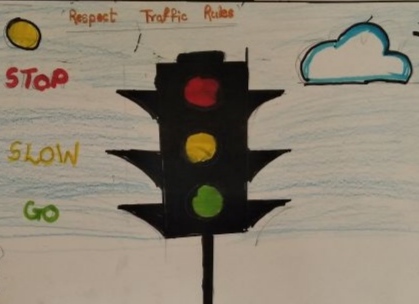
Once upon a time, there was a little girl named Nikki who loved to play outside. One day, she decided to ride her bike to the park. She put on her helmet and started riding. As she was riding, she saw a red light at the intersection. She remembered that red means stop. So she stopped her bike and waited for the light to turn green. When the light turned green, she looked both ways before crossing the street.

Nikki knew that yellow means slow down and prepare to stop. She also knew that the walking man symbol at intersections are for pedestrians. She crossed the road only when these signs turned green.


Nikki always followed traffic rules and stayed safe while riding her bike.

It’s important to follow traffic rules so that everyone can stay safe on the road.

Traffic light

Photosynthesis

Once upon a time, there was little girl named Nikki. She loved playing in the garden.

Once a friend of her started plucking flowers.

The gardener present there started yelling  on her friend citing that plucking the flowers will hurt the plant. They will be in pain. Afterall they also are living beings like human.

Nikki was confused that if plants are living beings, then they must also be eating food to grow. She asked her father, ” Who cooks food for plants and where is their kitchen? “

Her father answered her query in the form of a short story as follows:

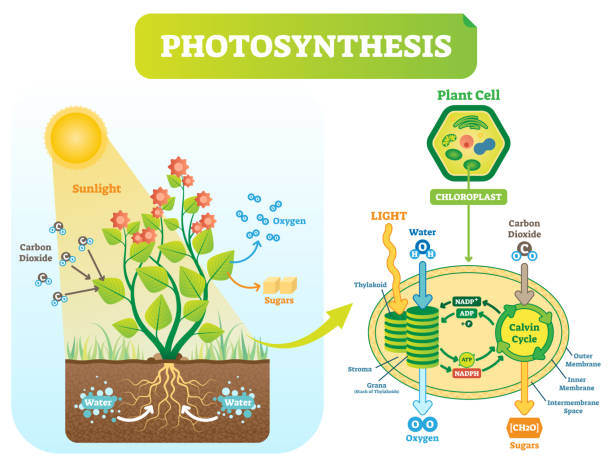
Once upon a time, there was a little plant that lived in a garden. The plant was very special because it could make its own food. It did this by using a special process called photosynthesis.

Photosynthesis is when plants use sunlight to make their own food. They take in water from the soil and carbon dioxide from the air. Then they use the energy from the sun to turn the water and carbon dioxide into food and oxygen.

The little plant was very happy because it could make its own food in its leaves (kitchen) , and grow big and strong. And that’s how photosynthesis works!

Photosynthesis

Plant Life Cycle

Once upon a time, there was a little girl named Nikki. Once she was eating Strawberry. Her elder sister, Gungun told her to keep the seeds of the Strawberry separately so that they can sow it and a new Strawberry tree will grow.


Unable to understand this, Nikki asked her father, “How can a small seed become a big tree? “.

Her father explained her the concept through a short story as follows:


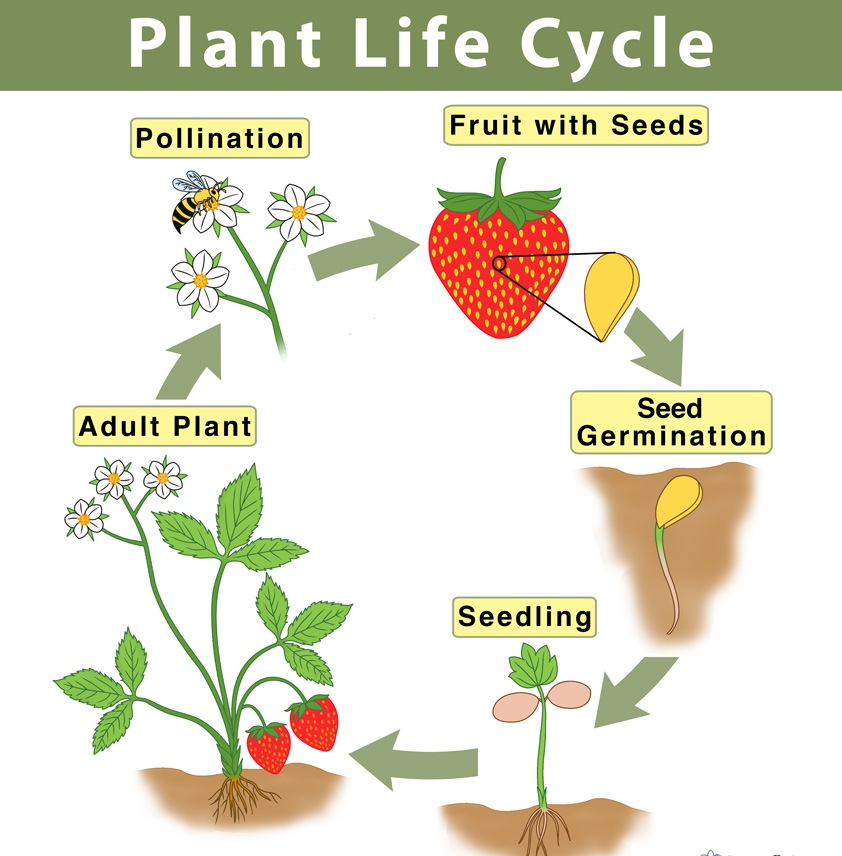
Once upon a time, there was a tiny seed. The seed was buried in the soil and it started to grow.

A little sprout came out of the seed and it grew into a small plant. The plant grew bigger and bigger and it started to grow leaves.

The leaves helped the plant to make food from sunlight and water. The plant also grew flowers which were very pretty.

The flowers attracted bees and butterflies which helped the plant make seeds.

When the seeds were ready, they fell off the plant and landed on the ground. Then, new plants grew from those seeds and the cycle started all over again!

Plant Life Cycle

Friction

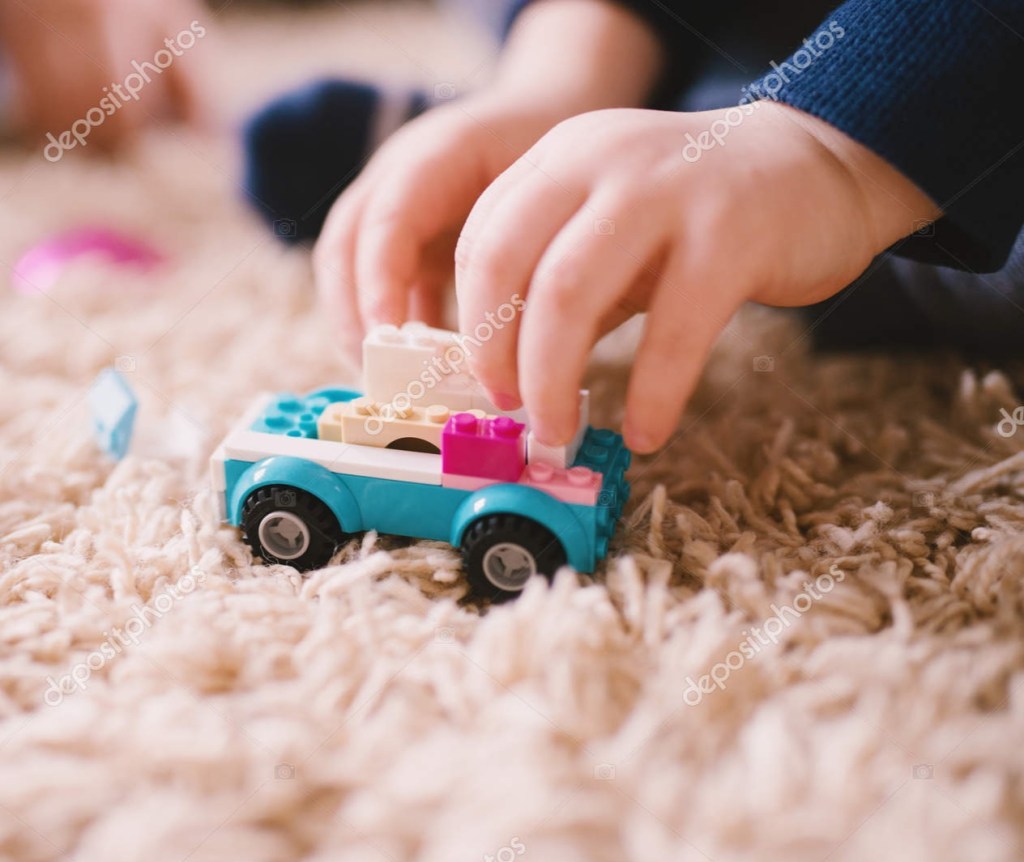
Once upon a time, there was a little girl named Nikki. She loved to play with her toy car on the floor. One day, she noticed that her toy car was not moving as fast on the carpet as it did on the smooth floor. She tried to push it harder but it still didn’t go as fast.

Nikki asked her father about why was this happening. Her father explained that the carpet was rough and bumpy which made it harder for the wheels of the car to turn. This is called friction.

Nikki realised that friction is actually like a force that slows things down when they rub against each other. It happens when two things are pushed together and one thing tries to slide over the other thing.


Her father showed her how she could make the car go faster by putting it on a smooth surface like a table or a wooden floor. The wheels of the car could turn more easily because there was less friction.

Nikki’s toy car on carpet

Greenhouse effect

Once upon a time, there was a little girl named Nikki. She loved playing outside in the sun. One day, she noticed that it was getting hotter and hotter outside.

She asked her father why it was so hot. Her father explained that the sun was shining down on Earth and warming it up. But some of the heat was getting trapped inside Earth’s atmosphere by gases like carbon dioxide and methane. This is called the greenhouse effect.
It’s like when you go into a greenhouse where plants grow. The glass walls trap the heat inside so that the plants can grow even when it’s cold outside .


Nikki understood that the greenhouse effect is a process that occurs when gases in Earth’s atmosphere trap the Sun’s heat. This process makes Earth much warmer than it would be without an atmosphere. The greenhouse effect is one of the things that makes Earth a comfortable place to live.

Nikki’s Impression about Greenhouse effect