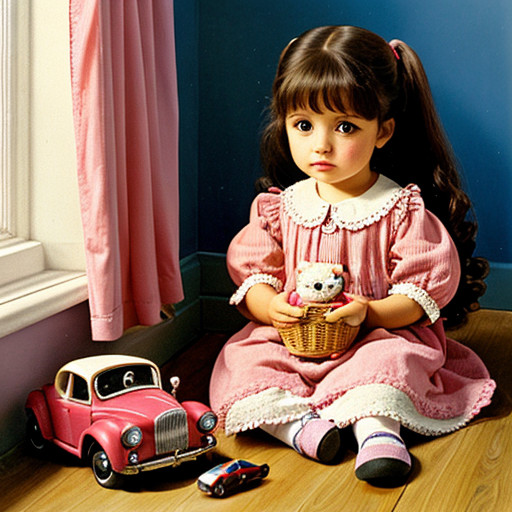
Once upon a time, there was a little girl named Nikki who loved to play with her toys. One day, she was playing with her favorite toy car and noticed that the car’s wheels were spinning very fast. She wondered why the wheels were spinning so fast and asked her father.
Her father explained that the wheels were spinning fast because they were moving back and forth very quickly. This movement is called vibration.
When something vibrates, it creates something called a wave. The wave is like a ripple in a pond when you throw a stone in it.
Nikki’s father then explained that waves have two important parts: frequency and wavelength.
Frequency is how often the wave moves back and forth, while wavelength is how long it takes for the wave to complete one full cycle.
Nikki’s father showed her how to make waves in a bowl of water by tapping his finger on the side of the bowl. Nikki saw that when he tapped slowly, the waves were big and far apart. But when he tapped quickly, the waves were small and close together.
Nikki’s father then explained that when waves have a high frequency, they are close together like the small waves in the bowl of water. When waves have a low frequency, they are far apart like the big waves in the bowl of water.
Nikki was fascinated by this and decided to try it out with her toy car. She noticed that when she moved her car slowly, the wheels spun slowly and created big waves on the ground. But when she moved her car quickly, the wheels spun quickly and created small waves on the ground.
From that day on, Nikki understood what frequency and wavelength meant and had fun experimenting with different toys to see how they created different types of waves.
Once upon a time there was a little girl named Nikki. Once she went to a cozy little village nestled among rolling hills. Nikki was a curious 5-year-old girl. Nikki had eyes that sparkled like dewdrops on a sunny morning, and her imagination danced like butterflies in a meadow.
One bright day, as Nikki played in her garden, she noticed something extraordinary. The sun, that golden ball of warmth, painted everything around her with its invisible brushes. But Nikki wondered, “Why does the sun feel warm on my skin? And why do some things glow like secret treasures?”
Her father, who knew the secrets of the universe, sat down beside Nikki. “Ah, my little star,” her father said, “let me tell you about two magical lights: infrared and ultraviolet.”
Infrared Light is like a Cozy Blanket of Warmth.
“Imagine,” her father began, “that infrared light is like a soft, invisible blanket that the sun wraps around you. It’s like a warm hug from the sky! You can’t see it with your eyes, but you can feel it on your skin when you step outside.”
Nikki’s eyes widened. “So when I bask in the sun, I’m really snuggling under an invisible blanket?”
“Yes!” her father chuckled. “Infrared light has longer waves than the colors we see—like red—but it’s too shy to show itself. It keeps us warm, helps flowers bloom, and even makes your hot chocolate stay cozy!”
On the other hand, Ultraviolet Light is the light which provides the Secret Glow.
“Now,” her father continued, leaning closer to Nikki, “let’s talk about ultraviolet light. It’s like a mischievous fairy that dances around us. Remember rainbows? They have colors from red to violet. Well, ultraviolet light lives just beyond violet.”
Nikki nodded eagerly. “What does it do?”
“Ultraviolet light is like a secret treasure detector,” her father whispered. “It makes certain things glow! Have you seen white clothes or teeth shine under special lights? That’s ultraviolet magic! It tickles special materials and says, ‘Look at me!’”
“But why can’t I see it normally?” Nikki asked.
“Because our eyes don’t have ultraviolet vision,” her father explained. “But butterflies and bees can see it—they’re like little UV detectives!”
“Now here’s the best part,” her father said with a twinkle in his eye. “The sun mixes all these lights together—red, orange, yellow, green, blue, and violet—to create white sunlight! It’s like a cosmic chef’s recipe.”
Nikki giggled. “So sunlight is like a rainbow soup?”
“Exactly!” her father laughed. “And each ingredient—the colors we see and the invisible infrared and ultraviolet—has its own superpowers.”
From that day on, Nikki saw the world differently. She imagined herself wrapped in cozy infrared blankets while chasing secret glows with her UV vision.
And so, dear reader, if you ever meet a 5-year-old named Nikki chasing rainbows or inspecting glow-in-the-dark stickers—remember that she’s unraveling the universe’s magical recipe of light.
And who knows? Maybe one day Nikki will discover her own secret light—a color no one has ever seen before—and share it with the world.
The end… or perhaps just the beginning of more magical adventures.
Once upon a time, there was a little girl named Nikki.
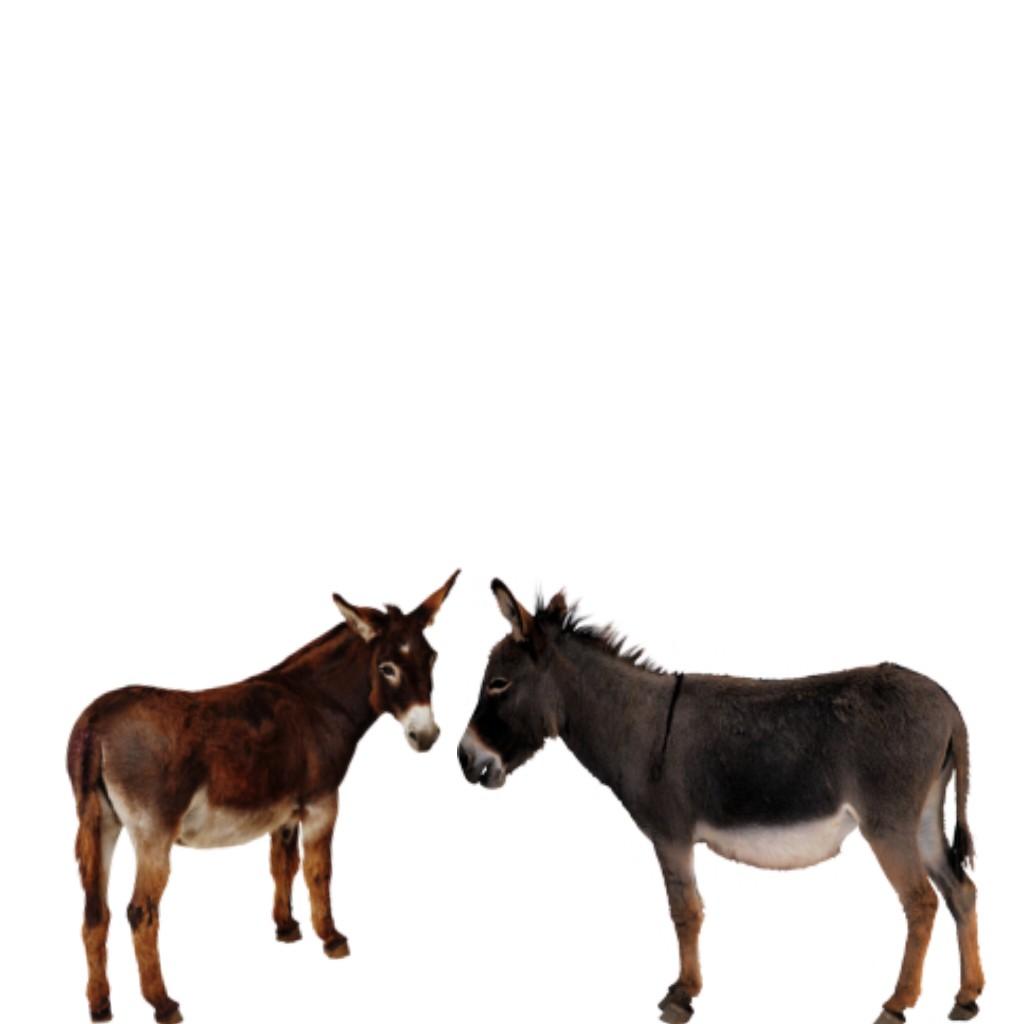
One day, Nikki saw Donkey and Ass playing together in the field. They looked very similar, but they had some differences. Donkey had longer ears than Ass, and his coat was a little darker. Ass was a little smaller than Donkey, but he was faster. She went up to them and asked, “What’s the difference between you two?”
Donkey replied, “Well, I’m a donkey, and he’s an ass.”
Nikki looked confused. “What does that mean?”
Donkey explained, “We’re both part of the same family of animals called equids. But we’re different species. I’m a domesticated donkey, and Ass is a wild ass.”
Nikki still looked confused. “What’s the difference between domesticated and wild?”
Donkey smiled. “Domesticated means that humans have trained us to work with them. We help them carry things and do other jobs. Wild animals live on their own in nature.”
Ass added, “And we’re different species because we have different numbers of chromosomes in our cells.”
Nikki looked at them both with wide eyes. “Wow! You guys are so cool!”
Donkey and Ass smiled at each other. They were happy to have made a new friend.
Once upon a time there was a little girl named Nikki. She loved animals, especially dogs. She had a pet dog named Charlie, who was her best friend. Charlie was a golden retriever, with soft fur and a friendly wagging tail. He liked to play fetch, cuddle, and lick Nikki’s face.
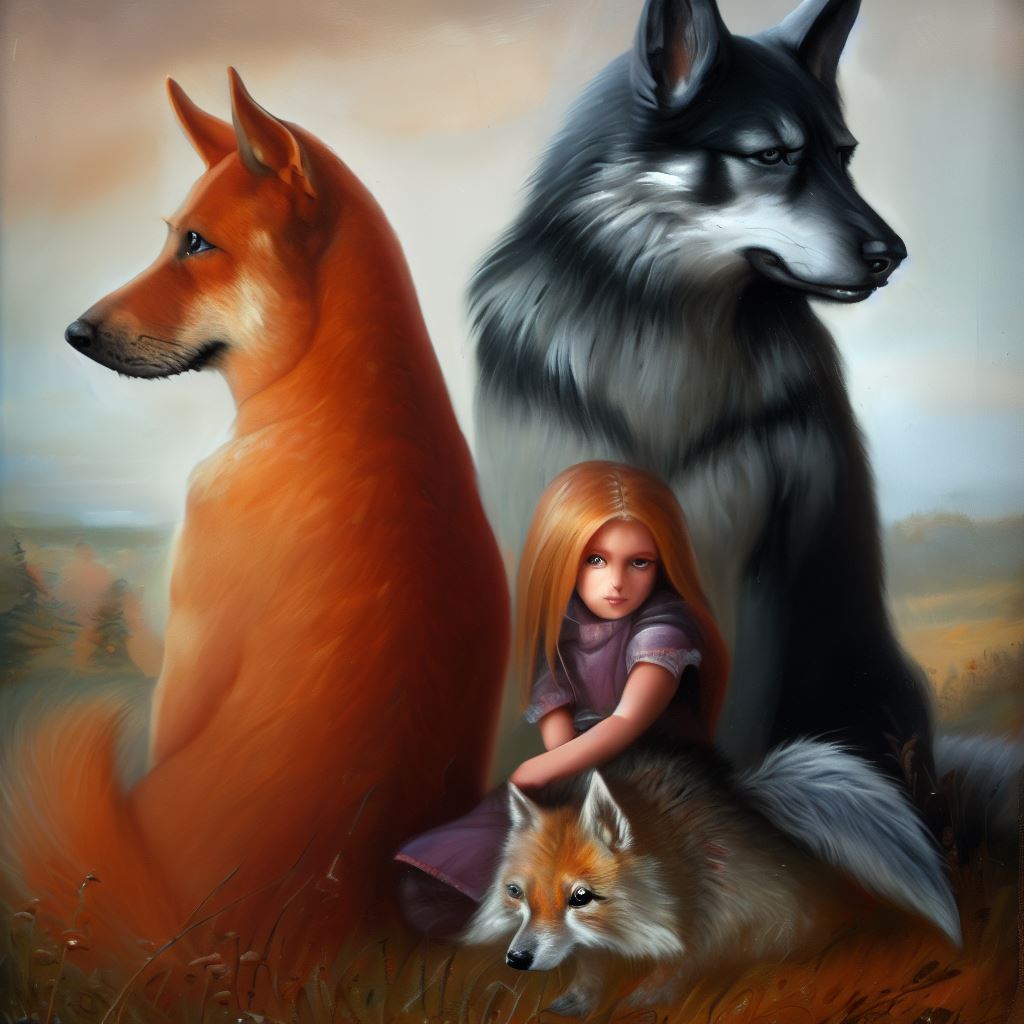
One day, Nikki and her parents went to the zoo. Nikki was excited to see all the different animals, but she was most curious about the ones that looked like dogs. She saw a big gray animal with pointy ears and sharp teeth. It was in a cage with other animals of the same kind. They were howling and growling at each other.
“What is that, Papa?” Nikki asked.
“That is a wolf, honey. Wolves are wild animals that live in packs. They are related to dogs, but they are not the same. Wolves are more aggressive and dangerous than dogs. They hunt other animals for food and defend their territory from intruders.” Nikki’s father explained.
“Wow, they look scary. Can I pet them?” Nikki asked.
“No, sweetie. You can’t pet them. They might bite you. Wolves don’t like humans very much. They prefer to stay away from us.” Nikki’s father said.
“Oh, okay.” Nikki said, feeling a little disappointed.
They moved on to another section of the zoo, where they saw a smaller animal with reddish fur and a bushy tail. It was running around and digging holes in the ground. It had a long snout and bright eyes.
“What is that, Papa?” Nikki asked.
“That is a fox, darling. Foxes are also wild animals that are related to dogs and wolves, but they are not the same either. Foxes are more clever and cunning than dogs and wolves. They use their intelligence and speed to survive in different environments. They eat small animals like mice and rabbits, but they also eat fruits and vegetables.” Nikki’s father explained.
“Wow, they look cute. Can I pet them?” Nikki asked.
“No, honey. You can’t pet them either. They might scratch you. Foxes don’t trust humans very much. They are very shy and sneaky.” Nikki’s father said.
“Oh, okay.” Nikki said, feeling a little sad.
They continued their tour of the zoo, seeing many other animals like lions, tigers, bears, monkeys, elephants, giraffes, and more. Nikki enjoyed watching them all, but she still wished she could pet the ones that looked like dogs.
When they returned home, Charlie was waiting for them at the door. He barked happily and jumped on Nikki, licking her face.
“Hi, Charlie! I missed you so much! You are the best dog ever!” Nikki said, hugging him.
Charlie wagged his tail and snuggled with her.
Nikki realized that she didn’t need to pet wolves or foxes, because she had Charlie. Charlie was her dog, and he loved her unconditionally. He was loyal, friendly, and fun. He was not wild or scary or sneaky. He was just perfect for her.
Once upon a time there was a little girl named Nikki. She loved animals and wanted to learn more about them. She had a book with pictures of different animals and their names.
One day, she saw a picture of a frog and a picture of a lizard. She wondered what they were and how they were different from each other.
She asked her father, “Papa, what are these animals called? Are they the same kind of animal?”
Her father smiled and said, “No, Nikki, they are not the same kind of animal. The one with the smooth skin and long legs is called a frog. The one with the scaly skin and short legs is called a lizard. Frogs are amphibians and lizards are reptiles. Do you want to know what that means?”
Nikki nodded eagerly and said, “Yes, please!”
Her father said, “Well, amphibians and reptiles are both cold-blooded animals, which means they cannot make their own body heat. They have to get warm by lying in the sun or finding a cozy place to hide. But they have many differences too. Let me tell you a story about them.”
Nikki listened carefully as her father began the story.
“Once upon a time, there was a frog named Froggy and a lizard named Lizzy. They lived in a forest near a pond. Froggy loved to swim in the pond and catch insects with his sticky tongue. Lizzy loved to climb on the trees and catch insects with her sharp teeth.
One day, Froggy and Lizzy met each other at the edge of the pond. They said hello and started to chat.
‘You have such nice skin,’ Froggy said to Lizzy. ‘It is so shiny and colorful.’
‘Thank you,’ Lizzy said to Froggy. ‘You have such nice legs. They are so long and strong.’
‘Thank you,’ Froggy said to Lizzy. ‘Do you want to swim with me in the pond? It is so fun and refreshing.’
‘No, thank you,’ Lizzy said to Froggy. ‘I don’t like water very much. It makes my skin dry and itchy.’
‘Oh, I see,’ Froggy said to Lizzy. ‘Do you want to climb with me on the trees? It is so exciting and adventurous.’
‘No, thank you,’ Froggy said to Lizzy. ‘I don’t like heights very much. They make me dizzy and scared.’
‘Oh, I see,’ Lizzy said to Froggy.
They realized that they had very different preferences and hobbies.
‘Why are we so different?’ Froggy asked Lizzy.
‘Well, it is because we are different kinds of animals,’ Lizzy explained to Froggy.
She told him that she was a reptile and he was an amphibian.
‘Reptiles have scales that cover their bodies,’ she said. ‘They protect us from drying out and from getting hurt by predators.’
Amphibians have moist skin that helps them breathe,’ he said. ‘They absorb water and oxygen through their skin.’
‘Reptiles have lungs that help them breathe,’ she said. ‘We inhale air through our nostrils and exhale it through our mouths.’
‘Amphibians have gills when they are young,’ he said. ‘They live in water and breathe through their gills.’
‘Reptiles lay eggs that have hard shells,’ she said. ‘We bury them in the ground or hide them in nests.’
‘Amphibians lay eggs that have soft jelly-like coverings,’ he said. ‘We lay them in water or moist places.’
‘Reptiles hatch from their eggs as mini versions of their parents,’ she said. ‘We look the same as we grow up.’
‘Amphibians hatch from their eggs as tadpoles,’ he said. ‘We look very different from our parents until we change into frogs or salamanders or caecilians.’
They learned a lot about each other’s lives and characteristics.
‘That is so interesting,’ Froggy said to Lizzy.
‘Yes, it is,’ Lizzy agreed with Froggy.
They decided that even though they were different, they could still be friends.
They played together for a while, respecting each other’s likes and dislikes.
They had fun and learned from each other.
They became good friends and lived happily ever after.”
Nikki clapped her hands and said, “That was a great story, Papa! Thank you for telling me!”
Her father hugged her and said, “You’re welcome, Nikki! I’m glad you liked it!”
Nikki smiled and said, “I love amphibians and reptiles! They are both amazing animals!”
Her father smiled back and said, “Yes, they are! And so are you!”
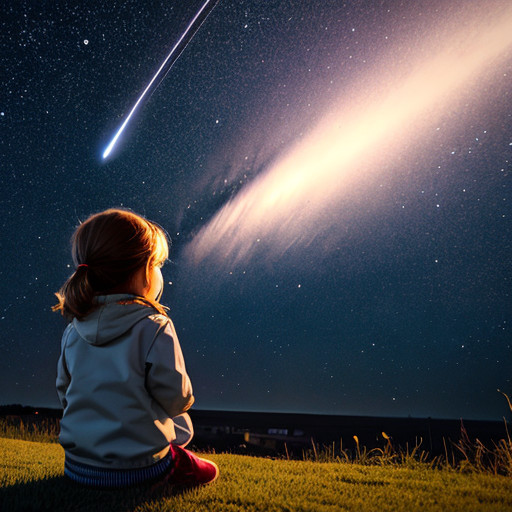
Once upon a time there was a little girl named Nikki. She loved to look at the stars at night. She liked to imagine that there are other worlds out there, full of wonders and adventures. One night, she saw a bright streak of light across the sky. She asked her father, “What is that, Papa?”
Her father replied, “That is a shooting star, Nikki. It is actually a piece of rock or metal that comes from outer space and falls to the Earth.”
Nikki was amazed. She asked, “Where does it come from, Papa?”
Her father replied, “Well, there are many places where it can come from. Sometimes, it comes from a big ball of ice and dust that travels around the sun. We call that a comet. Sometimes, it comes from a small planet that orbits the sun between Mars and Jupiter. We call that an asteroid. And sometimes, it comes from the moon or even another planet like Mars.”
Nikki was curious. She asked, “How do they get here, Papa?”
Her father replied, “They get here because something makes them change their path in space. Maybe they get too close to the sun or another planet and get pulled by their gravity. Maybe they collide with another object and break into smaller pieces. Maybe they just wander around until they cross the Earth’s path.”
Nikki was fascinated. She asked, “What happens when they get here, Papa?”
Her father replied, “When they get here, they have to go through the air that surrounds the Earth. We call that the atmosphere. The atmosphere is like a big blanket that protects us from the cold and harmful rays of the sun. But it also makes it hard for the shooting stars to get through. They have to go very fast and face a lot of friction and pressure from the air. This makes them heat up and glow like fire. That is why we see them as bright streaks of light.”
Nikki was excited. She asked, “Can we catch them, Papa?”
Her father replied, “Sometimes we can, Nikki. If they are big enough and strong enough to survive the atmosphere, they can reach the ground and become meteorites. Meteorites are very rare and valuable because they tell us about the history of our solar system and other worlds. Scientists love to study them and learn from them.”
Nikki was eager. She asked, “Can we find them, Papa?”
Her father replied, “Maybe we can, Nikki. But we have to be very lucky and careful. Meteorites are usually very small and hard to find. They can also be very hot or cold when they land. And sometimes they can make big holes in the ground called craters if they hit very hard.”
Nikki was hopeful. She said, “I want to find one, Papa.”
Her father said, “Maybe you will someday, Nikki. But for now, let’s just enjoy watching the shooting stars and make a wish.”
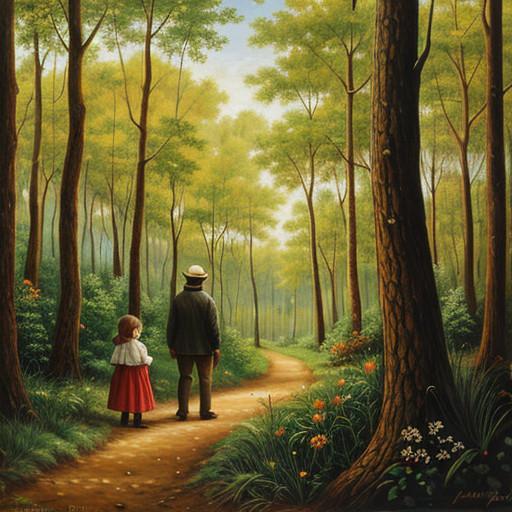
Once upon a time, there was a little girl named Nikki who loved animals. One sunny day, she went for a walk in the nearby Zoological garden with her father. As they wandered through the tall trees, Nikki saw a squirrel scurrying up to a tree. She asked her father, “Papa…Where does the squirrel live?”
Her father smiled and said, “Squirrels live in cozy homes called nests. They build their nests high up in the trees using leaves and twigs to keep them safe from danger.”
Curious, Nikki kept exploring. Soon, she spotted a rabbit hopping into a burrow. “Papa…Why did the rabbit go into that hole?” she asked.
Her father explained, “Rabbits build their homes underground, in burrows. They dig tunnels and line them with soft grass so they can stay hidden and feel safe.”
As they continued their walk, Nikki noticed a bird soaring above them. “Papa…Look at that bird! Where does it live?” she wondered aloud.
Her father pointed to a tree with a small hole and replied, “That bird lives in a special house called a nest. They make their nests using sticks, leaves, and feathers high up in the trees.”
Feeling excited to learn more about different animal homes, Nikki and her father reached a pond where they saw frogs sitting on lily pads. She asked her father, “Papa…Do frogs have homes too?”
“Yes,” her father said. “Frogs live in places called ponds or wetlands. They make their homes near water because it helps them stay cool and find food like insects and worms.”
Nikki’s eyes widened with excitement as she learned about animals and their homes during their walk in the forest. From that day on, she became even more fascinated by the wonderful diversity of animal habitats all around her.
And so, Nikki continued her adventures in nature, always eager to discover more about the incredible homes, animals create for themselves.
Once upon a time, there was a little girl named Nikki who loved to play with different kinds of toys. She had a big box full of balls, blocks, dolls, cars, and other things. One day, she decided to sort her toys by their size and shape. She took out all the balls and put them in a pile. Then she took out all the blocks and put them in another pile. She did the same for the dolls, the cars, and the other toys.
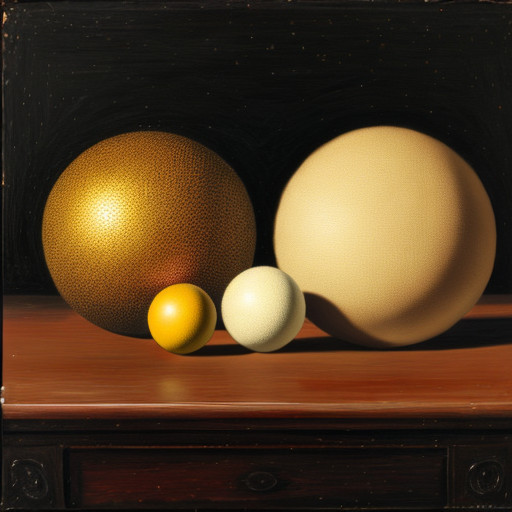
She noticed that some of the balls were bigger than others, but they all looked round and smooth. She wondered if they were all the same inside. She picked up a big golden coloured ball that was very light and easy to squeeze. She said, “This ball is big, but it is not heavy. It must have a lot of air inside.” She picked up a small white coloured ball that was very hard and heavy. She said, “This ball is small, but it is very heavy. It must have something solid inside.”
She wanted to know more about what was inside the balls. She asked her father for a pair of scissors and cut open the golden coloured ball and the white coloured ball. She saw that the golden coloured ball had a thin layer of rubber and a lot of air inside. She said, “This ball has a lot of space inside. The air does not weigh much.” She saw that the white coloured ball had a thick layer of metal and no air inside. She said, “This ball has no space inside. The metal weighs a lot.”
She learned that different things have different amounts of space and weight inside them. She learned that some things have more space and less weight, and some things have less space and more weight. She learned that this is called density. She understood, “Density is how much space and weight something has inside.”
She wanted to test her new knowledge. She filled a bucket with water and dropped different balls into it. She saw that some balls floated on the water and some balls sank to the bottom. She said, “The balls that float have more space and less weight than the water. The balls that sink have less space and more weight than the water.”
She was very happy with her discovery. She decided to try the same experiment with other toys. She found out that some blocks floated and some blocks sank, some dolls floated and some dolls sank, some cars floated and some cars sank, and so on.
She had a lot of fun playing with density. She said, “Density is very interesting. I can tell how much space and weight something has by how it behaves in water.” She thanked her father for the scissors and put her toys back in the box.
Once upon a time, there was a little girl named Nikki who loved to play with her toys. She had a dollhouse, a toy car, and a teddy bear. One day, Nikki’s father brought home a new toy for her. It was a small, round device with a screen on it.
“What is this?” Nikki asked.
“It’s a smart toy,” her father said. “It’s connected to the internet, so it can talk to other devices.”
Nikki was confused. “What does that mean?” she asked.
“It means that the toy can communicate with other things, like your phone or your computer,” her father explained. “For example, you can use your phone to control the toy, or the toy can tell you things about the world around you.”
Nikki was intrigued. “Can you show me how it works?” she asked.
Nikki’s father showed her how to use the app on her phone to control the toy. He also showed her how the toy could tell her the time, the weather, and even the latest news. Nikki was amazed. She couldn’t believe that her toy could do so many things.
Nikki played with her smart toy all day long. She had so much fun learning about all the things it could do. She even used it to tell her teddy bear a bedtime story.
Nikki’s smart toy was just one example of the Internet of Things. The Internet of Things is a network of physical objects that are connected to the internet and can communicate with each other. These objects can be anything from cars to clothes to toys.
The Internet of Things is still in its early stages, but it has the potential to change the way we live our lives. For example, smart homes can use the Internet of Things to control things like the lights, thermostat, and security system. Smart cars can use the Internet of Things to communicate with other cars and infrastructure to prevent accidents. And smart clothes can use the Internet of Things to monitor our health and fitness.
The possibilities are endless. The Internet of Things is changing the world, and it’s just getting started.
Nikki was amazed by the possibilities of Internet of Things. She thanked her father for introducing her to the “Internet of Things”. She could not pronounce it properly, so she gave it a short name “IoT”.
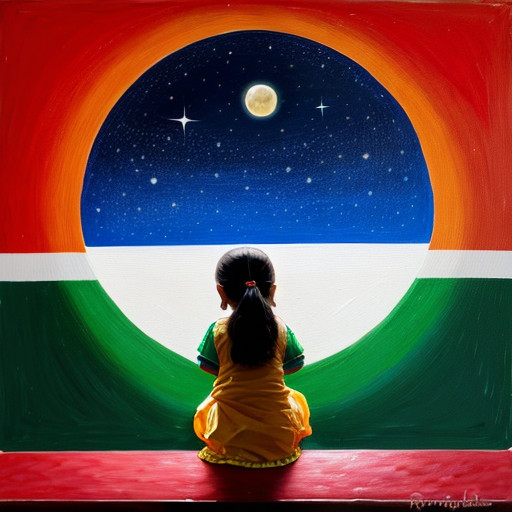
Once upon a time, in a land not too far away, there was a little girl named Nikki. Nikki loved watching the stars twinkle in the night sky and dreaming about the wonders of space. She would often ask her parents about the moon and what it was like up there.
One day, Nikki’s father told her about a special mission called Chandrayaan 3. He explained that Chandrayaan 3 was a spacecraft built by brilliant scientists from India. Its mission was to land on the moon and explore its mysteries.
Nikki’s eyes widened with excitement as her parents shared more about Chandrayaan 3. He told her that the scientists wanted to learn more about the moon’s surface, its rocks, and its craters. They also wanted to study if there was water on the moon, which could be very important for future space explorations.
Nikki couldn’t contain her curiosity. She asked her father why all of this was so important. He smiled and explained that by studying the moon, scientists can learn more about outer space and maybe even discover new things that could help us on Earth.
“Nikki,” her father said, “imagine if we could find new resources on the moon that could help us clean our planet or discover more about our universe. Chandrayaan 3’s mission is all about exploring and learning, just like you love to do! It’s like going on a big adventure to reveal the secrets of the universe.”
Nikki’s eyes sparkled with excitement. She couldn’t wait for Chandrayaan 3 to reach the moon and discover all the amazing things. She decided right then and there that when she grew up, she wanted to be a scientist just like the ones who built Chandrayaan 3.
From that day forward, Nikki became fascinated with space and the wonders of the universe. She knew that Chandrayaan 3 was just the beginning, and there would be many more exciting missions to come. And who knows, maybe one day, Nikki would join those brilliant scientists and explore the stars herself.
And so, the story of Chandrayaan 3 inspired Nikki to dream big and believe that anything was possible. It showed her that by asking questions, being curious, and working hard, she could make a difference in the world, just like the scientists who made Chandrayaan 3 a reality.



 Short stories for kids